
What Is the Claude Watermark? The AI Fingerprint Explained
6 min read

If you've ever wondered what the Claude watermark actually is, you're asking the right question before you try to remove it. Every writer, human or machine, has habits: favorite words, typical sentence lengths, a tendency to open paragraphs the same way. Linguists call this a stylometric fingerprint, and Claude's is unusually consistent, consistent enough that AI detectors have learned to spot it reliably. That consistency is exactly what people mean when they talk about the "Claude watermark."
How Claude's writing differs from human writing
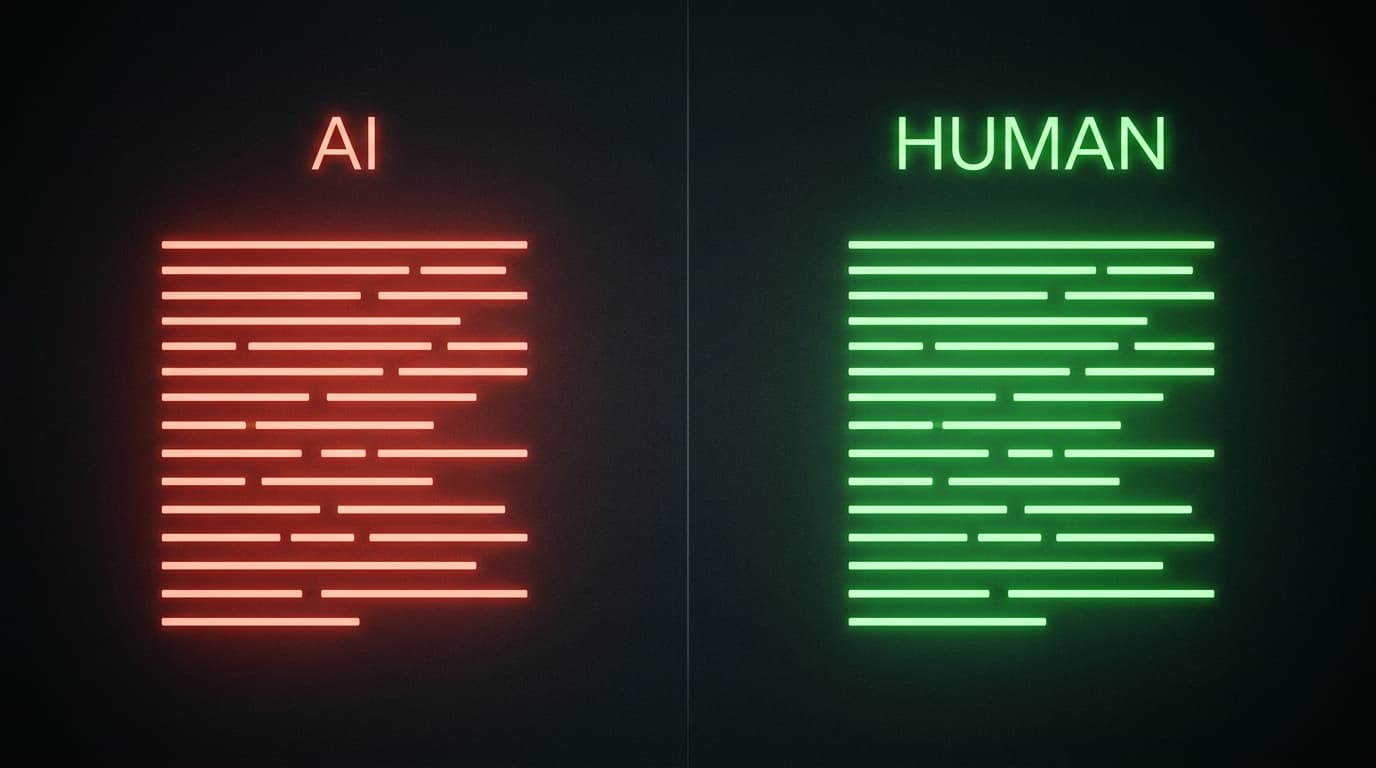
Ask ten different people to explain the same concept and you'll get ten different rhythms: some ramble, some clip their sentences short, some interrupt themselves. Ask Claude the same question ten times and the variation is far narrower. Sentences cluster around a similar length. Paragraphs tend to open with a topic sentence and close with a tidy summary. The result reads clearly and competently, but a little too evenly.
The Claude watermark's specific patterns
Want to humanize your AI text right now?
RewriteMate removes AI patterns and passes all major detectors, free for 500 words.
Try RewriteMate Free, 500 Words →A few patterns show up again and again in Claude's output:
- A preference for words like "utilize," "leverage," "delve," "multifaceted," and "robust"
- Sentences that stay within a narrow length band, rarely a sharp three-word fragment
- Paragraphs that open with a claim and close with a restatement of that claim
- Transitions that are smooth to the point of being formulaic, "furthermore," "moreover," "in conclusion"
- An absence of the small imperfections, contractions, asides, trailing thoughts, that human writing accumulates naturally
None of these are wrong, exactly. They're just consistent in a way that's statistically unusual for a person typing quickly under a deadline.
Why AI detectors can identify Claude so reliably
AI detectors don't read for meaning. They score probability: given this sequence of words, how likely is it that a language model generated the next one? Because Claude's outputs are drawn from a comparatively narrow, well-behaved distribution of phrasing, they tend to score as "highly probable machine text", which is exactly what detectors are built to flag. The more consistent the fingerprint, the easier it is to detect.
What happens when Claude text gets flagged
A flagged AI score doesn't just sit quietly. In academic settings it can trigger a conversation with an instructor. In a professional context it can undermine a report or pitch that took real effort to prepare, even when every fact in it is accurate and the ideas are entirely the writer's own. The frustrating part is that flagged text isn't always dishonest text, it's just text that reads statistically like a model's output.
How to remove it
Removing the fingerprint means deliberately breaking the patterns above: varying sentence length on purpose, dropping in contractions and asides, swapping out the recognizable vocabulary, and letting paragraphs end somewhere other than a tidy restatement. Doing this by hand for a full essay or report is slow, see our complete guide to humanizing AI text for the manual techniques. RewriteMate automates it, the humanizer reads your Claude-drafted text, identifies the fingerprint, and rewrites around it while keeping every fact, name, and argument exactly as you wrote them.
If you want to see your own text's score before and after, try the free humanizer, the first 500 words don't require a credit card. For the full removal walkthrough, see how to remove the Claude watermark step by step.
Frequently Asked Questions
What is the Claude watermark exactly?
It's the informal name for Claude's stylometric fingerprint, the consistent vocabulary, sentence rhythm, and paragraph structure that AI detectors learn to recognize as machine-generated.
Can AI detectors always identify the Claude watermark?
Not always, but reliably enough to matter. Because Claude's output is drawn from a narrower, more uniform distribution of phrasing than human writing, it tends to score as "highly probable machine text."
Does the Claude watermark mean my writing is dishonest?
No. A flagged score reflects statistical patterns, not intent. Plenty of flagged text is entirely accurate and original, it just reads statistically like a model's output.
How do I remove the Claude watermark from my text?
Break the patterns deliberately: vary sentence length, swap out flagged vocabulary, add contractions and asides, and let paragraphs end somewhere other than a tidy restatement, or use a tool like RewriteMate to do it automatically.
Ready to make your text undetectable?
Join thousands of writers, students, and creators. First 500 words free, no sign-up required.
Humanize My Text Free →Read more guides →